Latitude: 53.529 / 53°31'44"N
Longitude: -1.1772 / 1°10'37"W
OS Eastings: 454640
OS Northings: 403903
OS Grid: SE546039
Mapcode National: GBR NW6M.YP
Mapcode Global: WHDD1.WKMH
Plus Code: 9C5WGRHF+H4
Entry Name: Cusworth Hall
Listing Date: 27 May 1953
Grade: I
Source: Historic England
Source ID: 1192735
English Heritage Legacy ID: 334564
ID on this website: 101192735
Location: Cusworth Park, Cusworth, Doncaster, South Yorkshire, DN5
County: Doncaster
Civil Parish: Sprotbrough and Cusworth
Traditional County: Yorkshire
Lieutenancy Area (Ceremonial County): South Yorkshire
Church of England Parish: Doncaster St Leonard and St Jude with Scawthorpe St Luke
Church of England Diocese: Sheffield
Tagged with: English country house Historic house museum Local authority museum
SE50SW SPROTBROUGH CUSWORTH HALL
7/143 Cusworth Hall
27.5.53
GV I
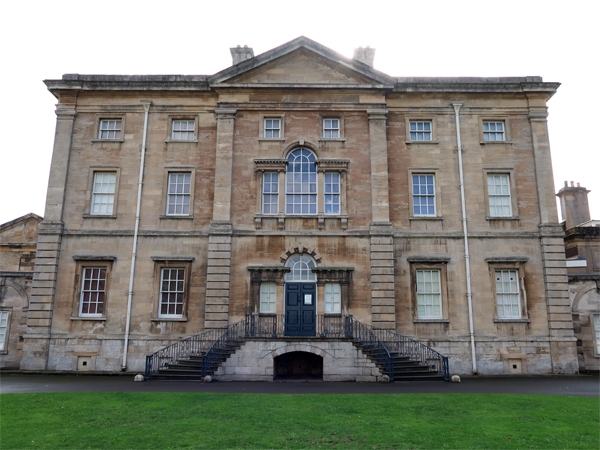
Country house, now local authority museum. 1740-45 by George Platt for William Wrightson, alterations 1749-53 by James Paine. Ashlar, slate roofs. 6 x 5 bay double-pile plan with front quadrant walls linking to 5 x 2 bay service wings facing entrance courtyard; 7-bay garden front to rear flanked by separately-roofed pavilions. Main block: 3 storeys with semi-basement. Entrance front: 2:2:2 bays divided by channelled quoinstrips rising as giant Doric pilasters, central bays break forward slightly. Square basement windows beneath band. 2 flights of steps with wrought-iron balustrades sweep up to entrance feature having double doors, fanlight and flanking casements in Doric Venetian surround with projecting voussoirs to archivolt. Outer bays have sashes with glazing bars in architraves with projecting sills and cornices. 1st-floor string course beneath Ionic Venetian window with shaped sill blocks and keyed archivolt; flanking windows as ground floor, no cornices. 2nd floor: central bays have 4-pane sashes in architraves, 6-pane sashes to outer bays. Central pediment with plain tympanum, full entablature to outer bays. Hipped roof with 2, corniced ridge stacks. Low quadrant wall on left has central doorway flanked by sashes in keyed, round-arched panels and forms link to 2-storey service wing of 2:1:2 bays. Wing has plinth and rusticated quoins. Central bay has quoined doorway with 5-part keystone and cornice, outer bays with unequally-hung, 15-pane sashes in plain architraves. Similar surrounds to centre-pivoted, 6-pane casements on 1st floor. Pediment to central bay; hipped, stone slate roof with square clock turret having ogee cupola and weathervane. Similar quadrant wall on right of main block has Ionic porch and links to matching kitchen wing now without its original stacks. 2-bay returns of each service wing have gate piers linked to outside corners, wrought-iron gates to'those on left. Garden front: 2:3:2 bays with rusticated semi-basement. Central ground-floor window has balustraded apron, 16-pane sash, eared architrave and consoled cornice; central lst-floor window has eared architrave; otherwise as outer bays of entrance front. To each side, a recessed, single-storey bay with flight of steps, door and balustraded cornice forms link to single-storey (with basement) pavilion. Pavilions each have rusticated basement and central round arch enclosing balustraded apron to Ionic tripartite window set beneath a Diocletian window; flanking semi-domed niches; pediments. Right return of right-hand pavilion has canted bay-window with balustrading to aprons and parapet. Similar projection to left-hand pavilion forms chapel apse.
Interior: many excellent features. Of principal interest the Chapel, in pavilion to left of garden front, with rich plasterwork by Joseph Rose, ceiling painting of the Ascension by Francis Hayman; apse separated by a serliana with festooned open pediment. Other pavilion: marble fireplace with Vitruvian-scroll frieze, Ionic pillars flank bay-window, coved ceiling with Rococo plasterwork. Main entrance hall: crinoidal limestone fireplace, ornate doorcases; Doric arcaded screen to transverse corridor with segmentally-pedimented doorcase opposite and a Doric serliana to corridor on each side. Room to left of entrance has pedimented overmantel with portrait of William Wrightson. Library opposite has Adam-style bookcases. Other ground-floor rooms with good fireplaces and enriched ceilings. Principal staircase: open string with fluting to alternate balusters, Wrightson arms in ceiling over. lst-floor corridor: Ionic pilasters and pedimented doorcases. Kitchen service wing: 3 fireplaces with keyed, segmental arches; breadovens; copper and fireplace in laundry. Home of the Wrightson and Battie-Wrightson families, purchased by local authority in 1961 and has sewed present purpose since 1967. H. Colvin, A Biographical Dictionary of British Architects, 1600-1840,1978,p610,p640. G. Smith, Cusworth Hall and the Battie-Wrightson Family, 1976 ed.
Listing NGR: SE5464603904
External links are from the relevant listing authority and, where applicable, Wikidata. Wikidata IDs may be related buildings as well as this specific building. If you want to add or update a link, you will need to do so by editing the Wikidata entry.


Other nearby listed buildings